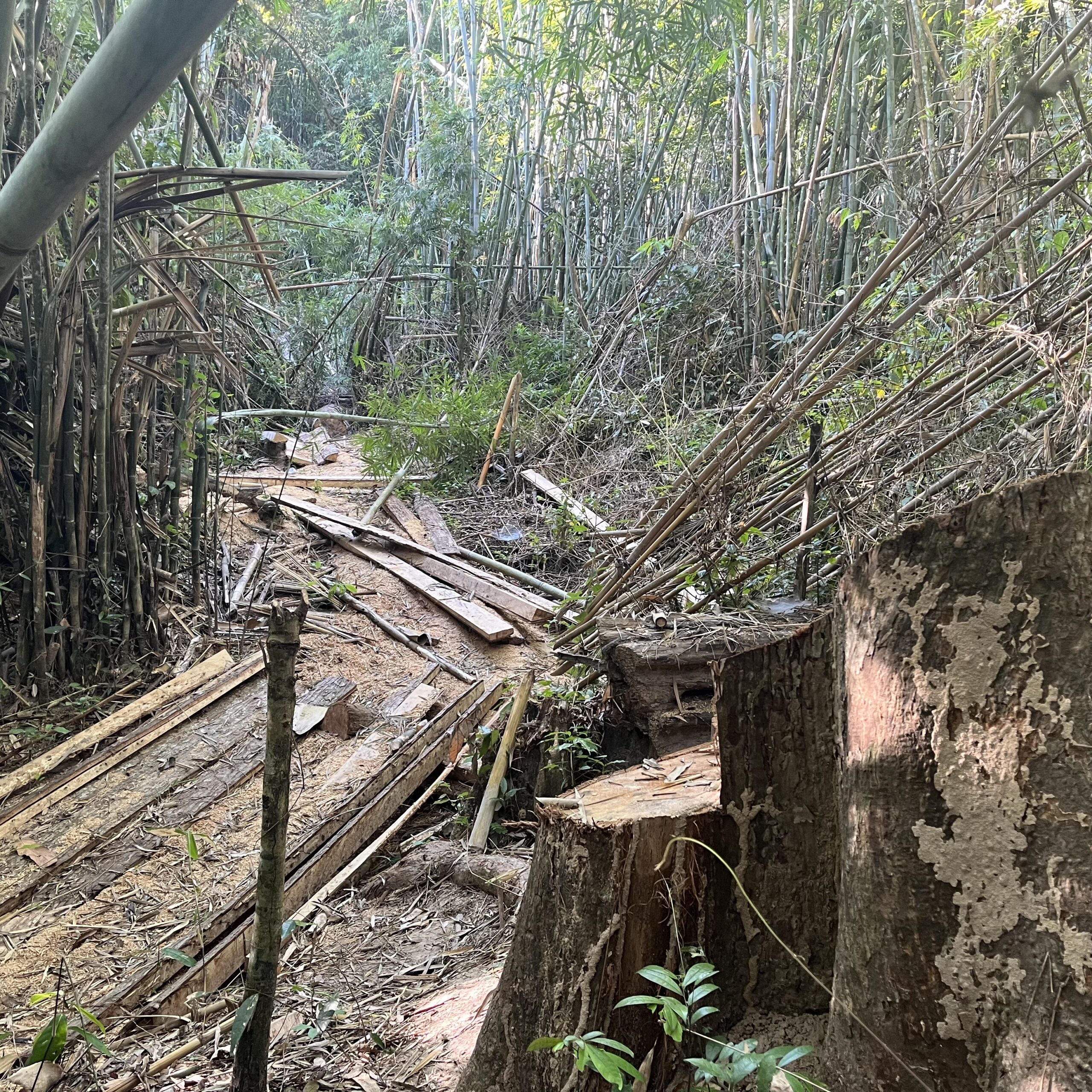
Laos offers some of the most rewarding outdoor adventures in Southeast Asia. Towering limestone cliffs, jungle ridgelines, hidden waterfalls, and rice field trails straight from a postcard make it an irresistible destination for hikers and trail runners. Trails are abundant, but these typically aren’t constructed or maintained for recreation. They are working trails used daily by hunters, farmers, and foragers to move between villages or reach the forest. Exploring them can be unforgettable — but it is not without risk. Trails are often wild and unmarked, medical support is limited, and the environment itself can be unforgiving.
With good preparation and awareness, though, the risks can be managed. Here are the key safety considerations to keep in mind:
1. Heat, Humidity, and Hydration
- Laos is tropical: hot, humid, and energy-sapping.
- The weather can change quickly, and the mountains can be significantly colder and wetter as you ascend.
- Dehydration and heat exhaustion are major risks.
- Carry more water than you think you’ll need and include electrolytes. Don’t assume you’ll find places to refill.
- Start early in the morning — by 10 a.m. the sun can already be scorching.
2. Terrain Hazards
- Trails are often steep, slick, and poorly maintained. Expect loose rocks, eroded paths, and slippery clay mud.
- Razor-sharp limestone karst is common.
- The landscape changes constantly — floods, fires, landslides, and fallen trees can obscure paths and force detours.
- River crossings may be deceptively fast or deep in the rainy season.
- Wear trail shoes with good grip and take descents cautiously — a twisted ankle deep in the jungle is a serious problem.
- Dense undergrowth makes off-trail travel nearly impossible.
3. Navigation Challenges
- Trail signage is rare and GPS coverage unreliable in valleys.
- Networks of braided paths often don’t appear on satellite images, and forks may surprise you.
- Download offline maps (Maps.me, Gaia, AllTrails), but expect inaccuracies.
- Let someone know your route and return time.
- A local guide is the safest option in remote areas.
- Always carry a GPS watch or device that lets you retrace your path back to safety.
4. Wildlife and Domestic Animals
- Ants can swarm onto you when brushing against foliage — keep skin covered and avoid bush-bashing.
- Day-biting, dengue-carrying tiger mosquitoes lurk in the shade. Cover up and always bring mosquito repellent.
- Biting flies can swarm under the canopy at certain times of year.
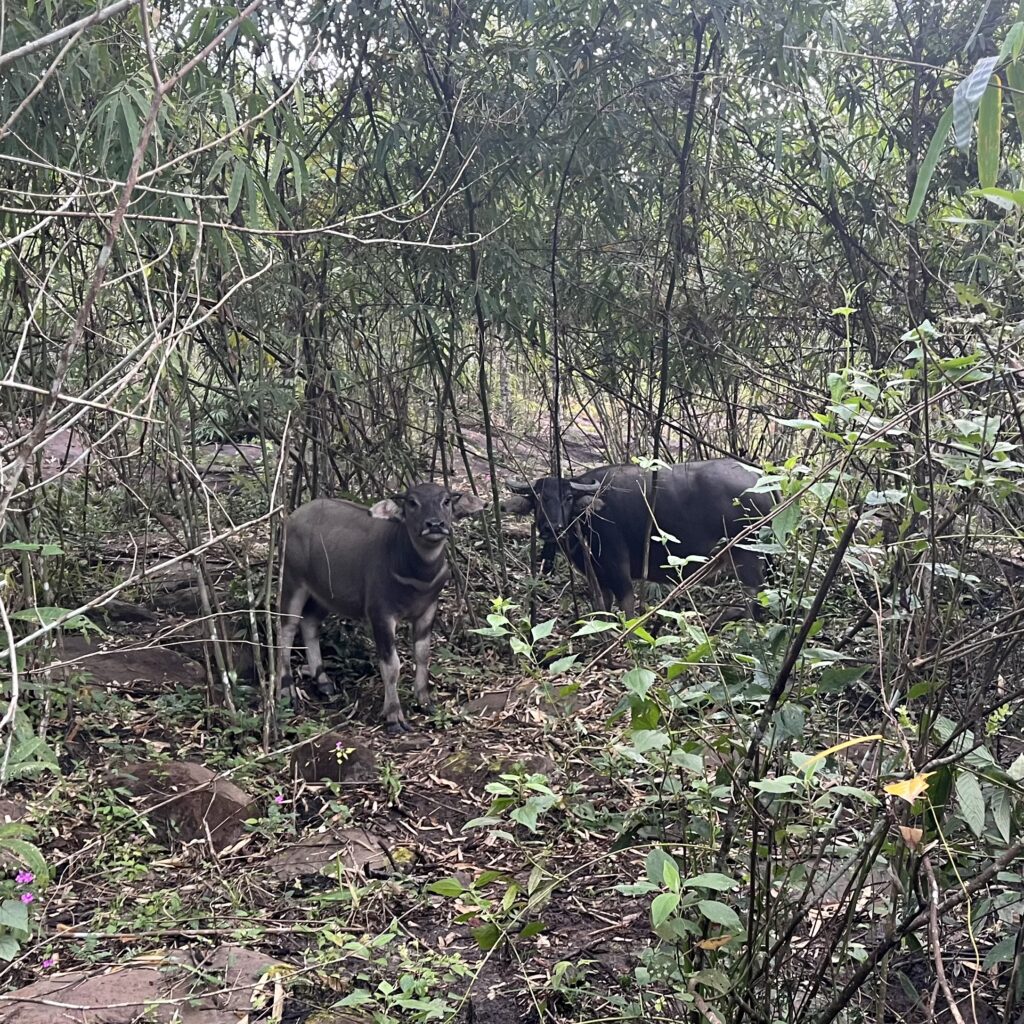
- Buffalo and cattle can block narrow tracks and startle easily.
- Dogs are common around villages and farms and can be aggressive; carry a stick or rock just in case.
- Snakes (including cobras and pit vipers) are present — step carefully, especially near streams and leaf litter.
- Leeches are common in the wet season.
5. Unexploded Ordnance (UXO)
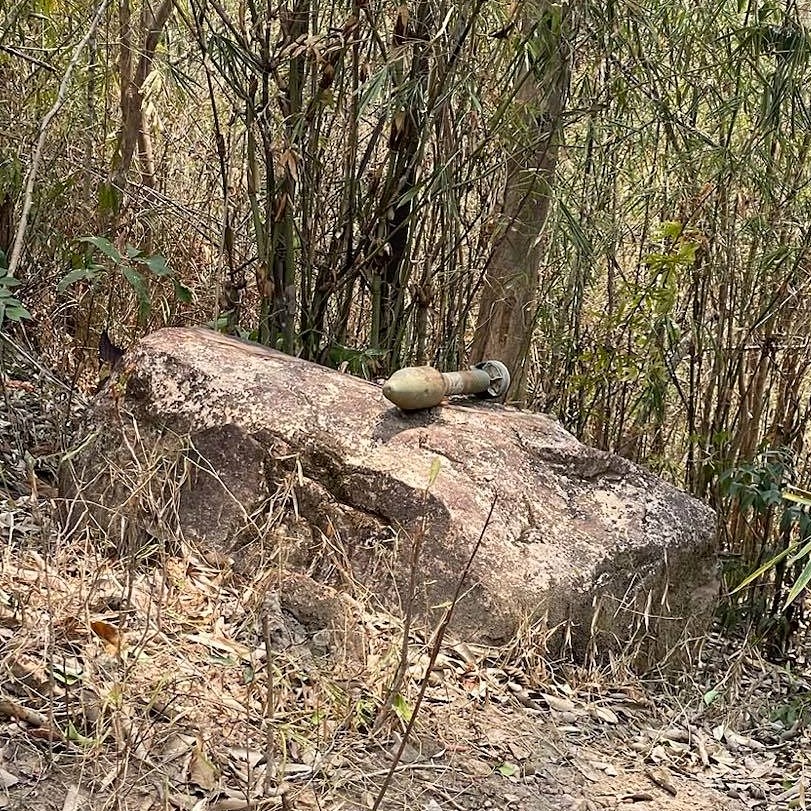
- Laos is one of the most heavily bombed countries in the world. UXO contamination still exists, especially near the Vietnamese and Cambodian borders.
- Always stay on established paths and heed local warnings.
- Never touch suspicious objects; report them if possible.
6. Communication and Connectivity
- Phone coverage limited away from major towns
- Inform a friend, guesthouse, or guide of your itinerary.
- For remote treks, consider a personal locator beacon (PLB) or satellite communicator.
7. Emergency Rescue Services
- Laos has a very limited emergency response, especially away from major towns.
- Your emergency contact will likely have to arrange for search and rescue.
- Evacuation can take hours; rescue teams, if they exist, may not be trained or equipped.
- Comprehensive travel insurance with medical evacuation is highly recommended.
8. Health and Medical Care
- Vientiane and Luang Prabang have hospitals and clinics, but rural facilities are basic.
- Standards may not meet international expectations; serious cases often require evacuation to Thailand.
- Carry a basic first aid kit, personal medications, and be prepared to self-treat minor injuries.
9. Personal Safety and Security
- People you meet deep in the forest may be there for hunting, logging, or mining, and may not apprecaite being observed or photographed .
- Hunters are active, and it is not uncommon to hear gunshots or chainsaws.
- Respect local customs, camps, and community land use — hikers and runners are still a rare sight in many rural areas. Always ask before taking pictures.
- Military personnel may be assigned to protected forest areas and could ask you to leave.
10. Seasonal Risks
Conditions vary dramatically through the year and should shape your planning:
- Rainy season (May–Oct): trails flood, rivers rise, and some routes become impassable. But during breaks in the weather, this time of year can also offer lush scenery.
- Cool season (Nov–Feb): best time to explore, though early mornings can be chilly in the mountains.
- Hot season (Mar–May): extreme heat and widespread agricultural burning create unsafe and unhealthy conditions.
Final Thoughts
The risks of hiking and trail running in Laos are real — from UXO to wildlife to sheer remoteness. But these challenges are also what make the country so rewarding for those seeking wild adventure. Prepare carefully, move with respect, and balance the thrill with good judgment.
With the right mindset and precautions, you’ll experience trails few foreigners ever see — and come back with stories worth telling.
Always remember to respect both nature and local communities along the way.